ROCK MOMENT – Bruce Springsteen “I’m On Fire”
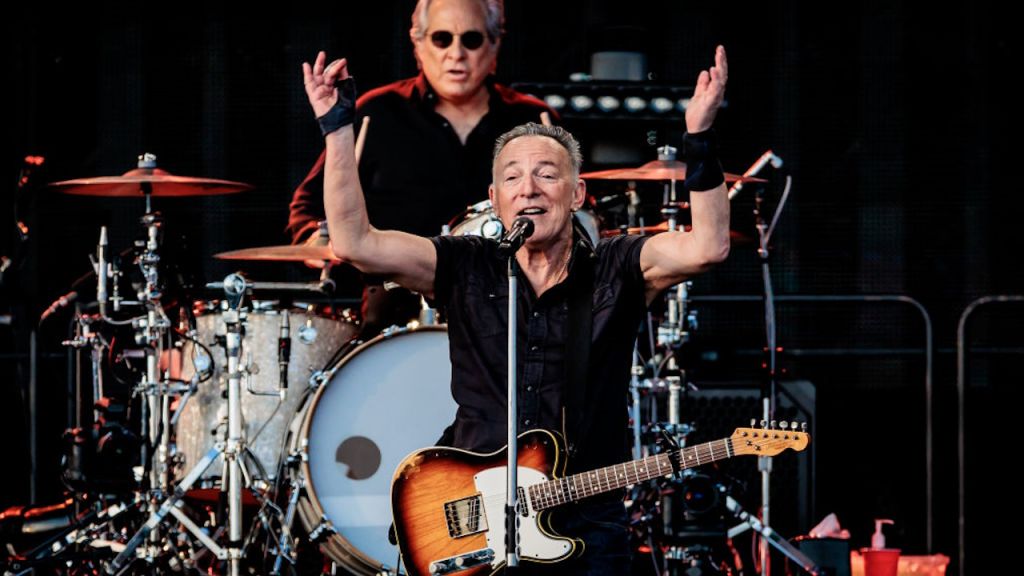
Few songs in Bruce Springsteen’s catalog create as much tension with so little as “I’m on Fire.” Released in 1985 as the fourth single from the blockbuster album Born in the U.S.A., the haunting ballad proved that Springsteen didn’t need a wall of guitars or a full-throttle rock anthem to captivate listeners. Instead, he delivered one of the most restrained—and mysterious—performances of his career.
Written during the sessions for Born in the U.S.A., “I’m on Fire” features a sparse arrangement built around Max Weinberg’s understated drumbeat, Roy Bittan’s subtle keyboards, Garry Tallent’s bass, and Springsteen’s hypnotic guitar. Producer Jon Landau wisely kept the production simple, allowing the song’s atmosphere and emotional intensity to take center stage. Springsteen sings almost in a whisper, creating an intimacy that contrasts sharply with the arena-sized anthems that surrounded it on the album.
Lyrically, “I’m on Fire” has sparked decades of discussion. The opening line—”Hey little girl, is your daddy home?”—has often been misunderstood when viewed outside the context of traditional blues and rockabilly songwriting. Springsteen has never offered a definitive explanation of the lyrics, preferring to let listeners interpret the song’s longing, obsession, and emotional desperation for themselves. Like many of his best songs, it explores desire, loneliness, and the darker corners of human emotion rather than presenting a straightforward love story.
The recording came together quickly. According to members of the E Street Band, Springsteen often arrived in the studio with fully formed ideas, and “I’m on Fire” retained much of the understated feel from its early recordings. That minimalist approach helped separate it from the more bombastic tracks on Born in the U.S.A., demonstrating the remarkable range of an album that would produce an astonishing seven Top 10 singles on the Billboard Hot 100.
Springsteen’s longtime producer and manager Jon Landau has frequently praised Bruce’s instinct for knowing when a song needs restraint instead of excess. That philosophy is evident throughout “I’m on Fire,” where every note serves the mood rather than showcasing technical virtuosity.
The song’s music video, directed by acclaimed filmmaker John Sayles, added another layer of intrigue. Instead of a conventional performance clip, the video casts Springsteen as a working-class auto mechanic who develops a quiet attraction to a wealthy married customer. Rather than acting on his feelings, he repairs her vintage Ford Thunderbird and silently watches her drive away, reinforcing the song’s themes of yearning and unattainable desire. The cinematic approach stood out during MTV’s golden era and became one of Springsteen’s most memorable videos.
“I’m on Fire” reached No. 6 on the Billboard Hot 100 and became one of Springsteen’s most enduring radio hits. Over the years it has been covered by artists across multiple genres, including Johnny Cash, whose stripped-down interpretation highlighted the song’s timeless emotional core.
More than four decades after its release, “I’m on Fire” remains one of Bruce Springsteen’s most compelling recordings. Its quiet intensity, unforgettable melody, and enigmatic lyrics prove that sometimes the softest songs leave the deepest impression.


