ROCK MOMENT – AC/DC
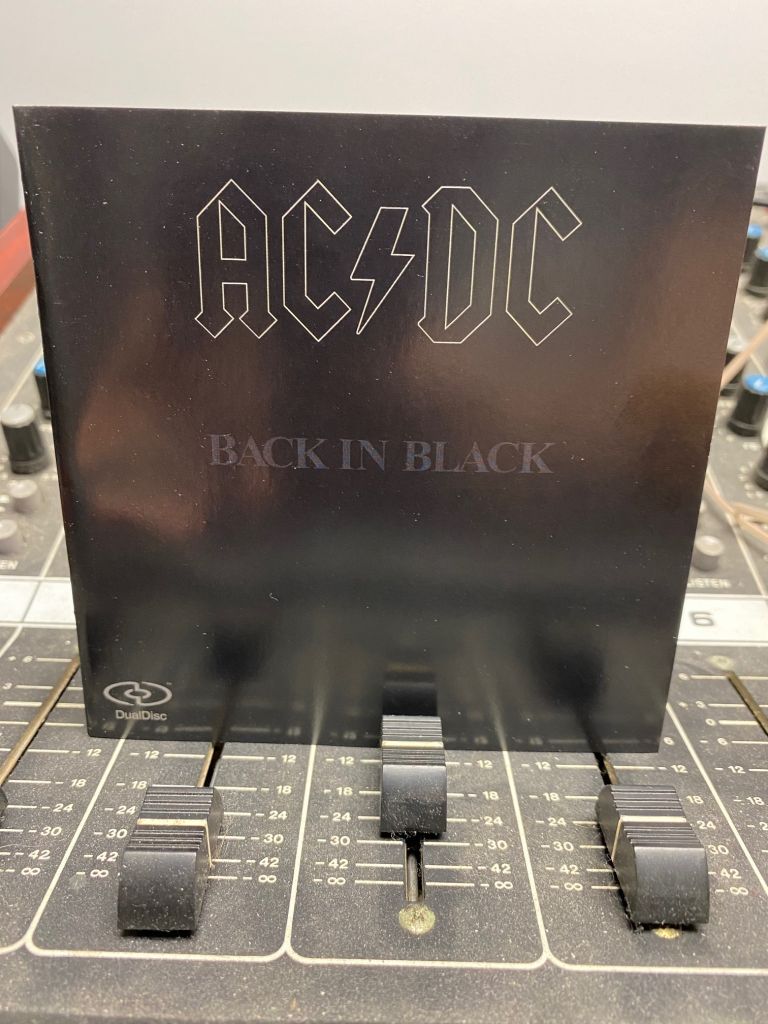
AC/DC’s Back in Black is not only one of the most famous rock albums ever made, it is also one of the most remarkable comeback stories in music history. Released in July 1980, the album was the band’s first without original singer Bon Scott, who died in February of that year. Rather than disband, the group chose to honor Scott’s memory by continuing, eventually recruiting Brian Johnson as their new frontman.
The recording sessions took place at Compass Point Studios in Nassau, Bahamas, with producer Robert John “Mutt” Lange. The studio had a relaxed, tropical atmosphere, but the band worked with intense focus. Lange was known for his meticulous attention to detail and his ability to capture both power and clarity, and he pushed AC/DC to tighten their performances to near perfection. Songs were rehearsed extensively before recording, often stripped down to their raw essentials to ensure every riff, beat, and vocal line hit with maximum impact.



Drummer Phil Rudd laid down his parts with a steady, no-frills groove that became the backbone of the album, while Cliff Williams’ bass locked in tightly with the rhythm guitar of Malcolm Young. Malcolm’s precise, percussive playing formed the foundation of the AC/DC sound, and Lange made sure it was recorded clean and punchy. Angus Young then layered his lead guitar over the top, crafting the blazing solos and instantly recognizable riffs that would become some of the most famous in rock history.
Brian Johnson’s vocals were another crucial part of the process. Lange worked closely with him, encouraging multiple takes to capture the perfect balance of raw grit and melodic control. Johnson has often recalled singing until his voice was nearly shredded, especially on demanding tracks like “You Shook Me All Night Long” and “Shoot to Thrill.” The dramatic church bell heard at the beginning of “Hells Bells” was recorded using an actual one-ton bronze bell cast specifically for the album, adding to the epic atmosphere.
The band also paid close attention to the album’s sonic space, using minimal studio effects to keep the sound direct and powerful. The goal was to make the record feel larger than life while still sounding like a band playing in a room, loud and unfiltered.
The title Back in Black and its stark black cover served as a tribute to Bon Scott, symbolizing both mourning and defiance. When the album was released, it became a global phenomenon, eventually selling over 50 million copies worldwide. Thanks to its disciplined recording process, legendary production, and unforgettable performances, Back in Black remains a benchmark for how a hard rock album should sound—timeless, thunderous, and emotionally charged.


